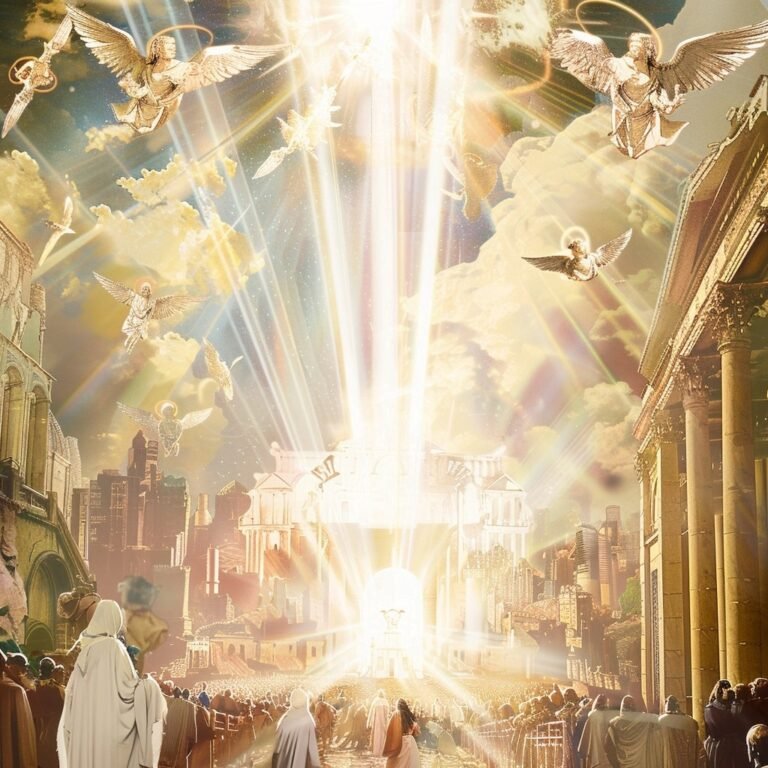
Does Hell really exist?

Do all unbelievers go to Hell (then the Lake of Fire)?
The question has been asked quite often: Do all those who die as unbelievers go to Hell (then eventually the Lake of Fire)? The short answer would be, yes; the Scriptures say, yes. Specifically, the Bible says, “If you declare with your mouth, ‘Jesus is Lord,’ and believe in your heart that God raised him from the dead, you will be saved” (New International Version, Romans 10:9-10). And “Jesus replied, ‘Very truly I tell you, no one can see the kingdom of God unless they are born again’” (New International Version, John 3:3).
The Bible insinuates that if you die an unbeliever, you have no chance of eternal life. Hebrews 9:27 says, “Just as people are destined to die once, and after that to face judgment, so Christ was sacrificed once to take away the sins of many; and he will appear a second time, not to bear sin, but to bring salvation to those who are waiting for him” (New International Version).
With that being said, God’s perfect foreknowledge means He knows who is going to Hell, and eventually the Lake of Fire, before a person is even born.
As revealed in Revelation 13:8, “And all that dwell upon the earth shall worship him, whose names are not written in the book of life of the Lamb slain from the foundation of the world” (King James Version). This seems to allude to the fact that before the foundation of the world, we are either in the Lamb’s Book of Life or we are not based upon His foreknowledge of whether we will choose to freely accept Him or not; He certainly knows our lives from beginning to end—including everything we will do and whether we will choose eternal life—even before the creation of Earth. Scripture states, “For whenever our heart condemns us, God is greater than our heart, and he knows everything” (English Standard Version, 1 John 3:20).
Given that God is infinitely just and all-knowing, He is clearly able to discern whether someone is rejecting Him versus someone who is confused, has doubts, etc. Moreover, Romans 1:20 says, “For since the creation of the world God’s invisible qualities—his eternal power and divine nature—have been clearly seen, being understood from what has been made, so that people are without excuse” (New International Version).
Nobody will be forced into Heaven, and nobody will accidentally end up in Hell.
Some wonder why people are created if God knows they are going to Hell. While this question probably has more than one answer: One reason is these people are part of God’s will and again, humans can accept or reject their Creator. For example, if Hitler did go to Hell, which he very well may have, why did God create him especially given all of the pain he inflicted on others? We can speculate that Hitler existed to show just how evil one can be among all of the other possibilities. He had “ripple effects” from a large-scale, big picture viewpoint as well as in the individual lives and stories of those affected. As Isaiah 55:8 states, “‘For my thoughts are not your thoughts, neither are your ways my ways,’ declares the LORD” (New International Version).
God doesn’t want to send anyone to Hell (2 Peter 3:9), but many just do not want to have anything to do with Him and eventually end up in eternal torment as a consequence. These people chose to freely reject Him, end up in Hell, and wouldn’t have it any other way even while they are in Hell, in my opinion. God is a just God, we are the sinful ones, and the just punishment for sin—sin against an infinitely Holy Being—is infinite time in the Lake of Fire.
Aren’t most people going to Heaven?
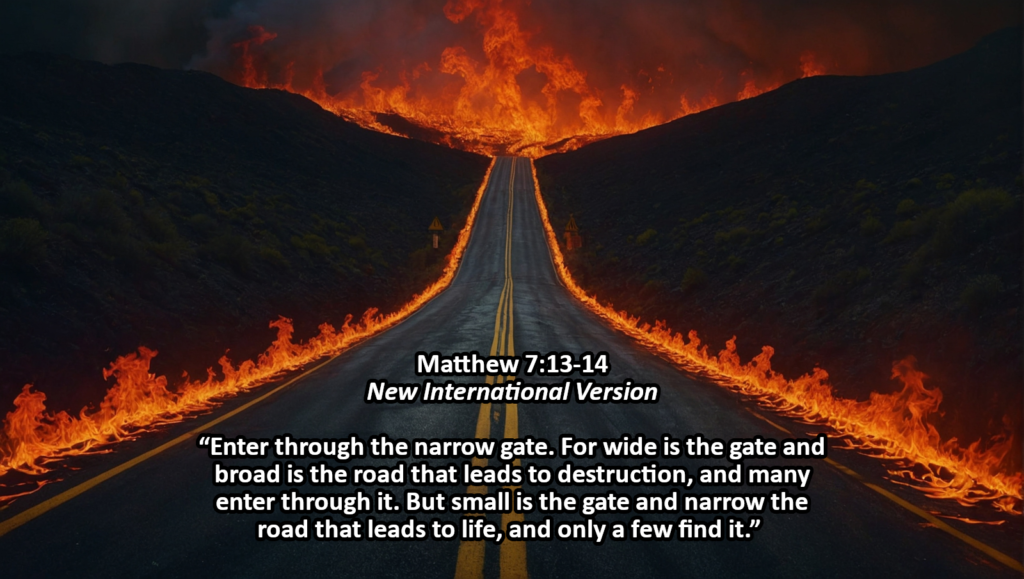
The Bible also says in John 14:6, “Jesus answered, ‘I am the way and the truth and the life. No one comes to the Father except through me’” (New International Version). Look at how many false religions exist in the world, and how many people are not Christians. This is additional evidence that most people are not going to Heaven, contrary to what you may hear in the world.
Verses on Hell and the Lake of Fire
Revelation 14:11
New International Version
“And the smoke of their torment will rise for ever and ever. There will be no rest day or night for those who worship the beast and its image, or for anyone who receives the mark of its name.”
Matthew 13:50
New International Version
“…and throw them into the blazing furnace, where there will be weeping and gnashing of teeth.”
Jude 7:7
New International Version
“In a similar way, Sodom and Gomorrah and the surrounding towns gave themselves up to sexual immorality and perversion. They serve as an example of those who suffer the punishment of eternal fire.”
Mark 9:48
New International Version
“…‘the worms that eat them do not die, and the fire is not quenched.’”
Mark 9:43-48
New International Version
“If your hand causes you to stumble, cut it off. It is better for you to enter life maimed than with two hands to go into hell, where the fire never goes out. And if your foot causes you to stumble, cut it off. It is better for you to enter life crippled than to have two feet and be thrown into hell. And if your eye causes you to stumble, pluck it out. It is better for you to enter the kingdom of God with one eye than to have two eyes and be thrown into hell, where ‘the worms that eat them do not die, and the fire is not quenched.’”
Christianity: Three views of Hell?
The topic of Hell is not talked about enough in the Church today. This does not make sense considering most people are going to the Lake of Fire. Most people will reject their Creator, Jesus Christ, and be tormented for their sins as a result. Moreover, given how this life is just a vapor, it makes even more sense to talk about where the majority will end up in the afterlife—where most are going very soon.
Eternal Conscious Torment (also known as “Traditionalism”) –
This is the view of Hell taken by most evangelical theologians throughout Church history. Contrary to eternal life, unbelievers will experience eternal death. Though sins are finite, these people have sinned against an infinitely Holy Being. Also, “I think the idea that Hell is a place where people continue to sin also makes sense that the punishment would go on” (“Frank explains Hell: is it eternal or temporary? | with @drchipbennett“ 00:02:41 – 00:02:52). Scripture literally uses the word “eternal” and “everlasting” (e.g., Matthew 24:51, Matthew 25:46, 2 Thessalonians 1:9, Daniel 12:2). Revelation 14:11 says, “And the smoke of their torment will rise for ever and ever,” but some say this is to not be interpreted literally.
Though Gregg is still undecided on his stance, he does list this in his book under the traditional view:
There will be no eternal grieving on the part of believers for those who are lost. God will wipe away all tears from their eyes (Revelation 21:4). This may involve the erasing of memories about former relationships (Isaiah 43:18), or it may involve a change in perspective on the part of believers, once they see the matter from God’s point of view (Isaiah 55:8-9; Job 42:5-6). (11)
Conditional Immortality (also known as “Conditionalism,” “Annihilationism,” “Extinctionism,” “Terminalism”) –
This doctrine states that only God is innately immortal, and God gives eternal life (immortality) to those who put their trust in Jesus Christ. The words perish, death, destroy, etc., in Scripture mean the unsaved will eventually cease to exist. After they die, they are tormented proportional to their sins and then are annihilated (they cease to exist similar to how they were before they were born). This brings a just and final solution to rebellion, avoids comprehending the idea of eternal torment by a loving God, and allows God to avoid the grief regarding souls being tormented forever.
Universal Reconciliation (also known as “Christian Universalism,” “Restorationism”) –
Eventually, all souls will come to repentance and will be restored. Christ died so that all could be saved, and “If all for whom Christ died are not ultimately reconciled, then Christ will never receive all that He died to obtain, and He becomes the cosmic Loser for all eternity, while the devil wins his desired object—which hardly agrees with biblical statements about Christ’s victory over sin, death, and Satan (Isaiah 42:1-4; Colossians 2:15; Hebrews 2:14; 1 John 3:8)” (Gregg 13). After death, unbelievers will be punished justly for their sins or until they come to repentance. This view asserts that given enough time, all men will repent and come to God. In this viewpoint, all are eventually saved.
My View
I believe the traditional view of Hell is the correct stance. The second most likely view to be correct is the annihilationist view. The universal reconciliation view seems highly unlikely, especially given that some are scorched by intense heat in the book of Revelation but will still refuse to repent or give Him glory (i.e., Revelation 16:9).
The Bible makes it clear with the words eternal, everlasting, and forever and ever that the Lake of Fire is eternal separation from God. Just as it’s unfathomable to imagine living forever, it’s unfathomable to picture someone being tormented forever. Even after 500 trillion years, the torment is basically just beginning.
Accept Jesus Christ as your Lord and Savior
The most important choice you can make is to accept Jesus Christ as your Lord and Savior. If you reject Him, nothing on earth compares to the agony that awaits you in the Lake of Fire.
If you are doubting Jesus Christ is God:

Click on image
If you want to know how this world ends:

Click on image